 FSA/HSA & CareCredit!
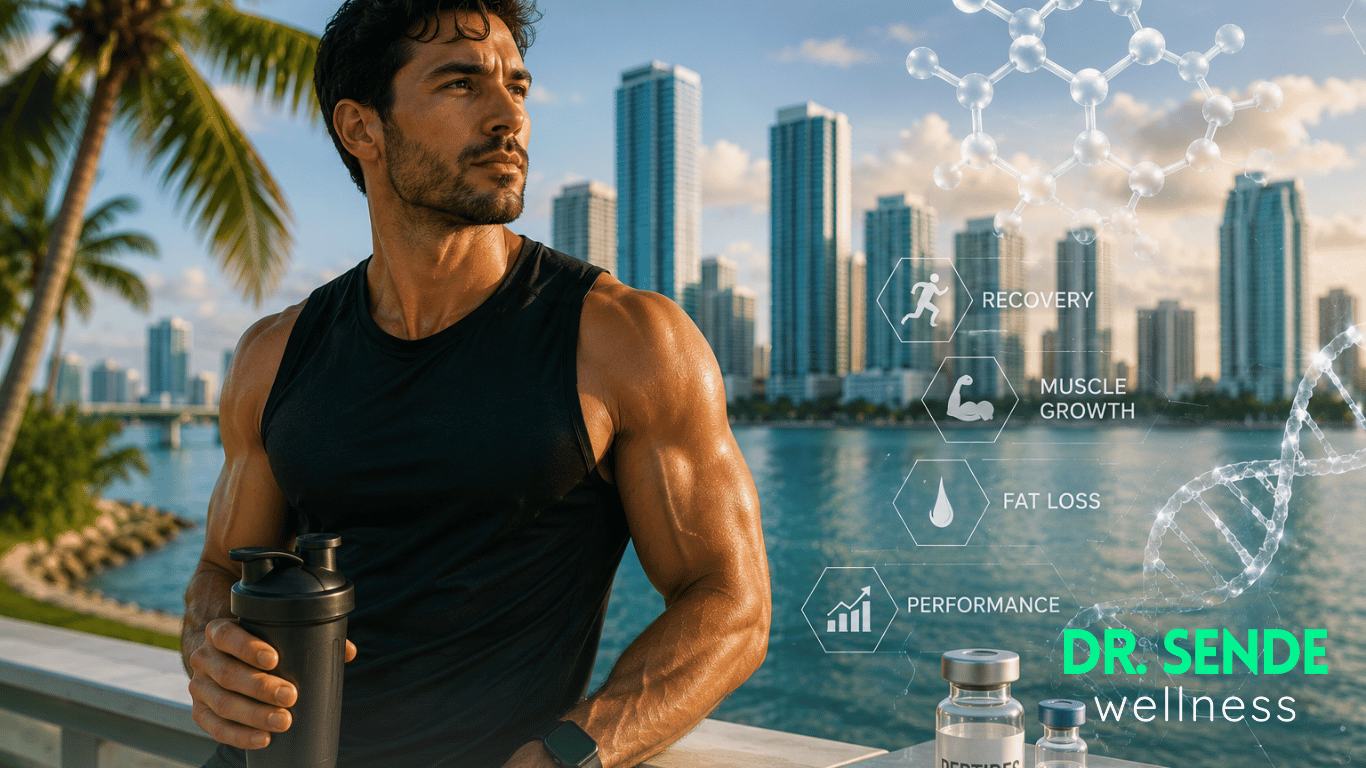
Beyond Traditional Training and Nutrition
You’ve got your training dialed in. Your nutrition is optimized. You’re getting 7-9 hours of sleep. Yet you’re still hitting plateaus, recovering slower than you’d like, and wondering if there’s a competitive edge you’re missing.
This is where peptide therapy enters the conversation—not as a replacement for fundamentals, but as a sophisticated tool to amplify what you’re already doing right. At Dr. Sende Wellness in Miami, we work with fitness enthusiasts, athletes, and competitive bodybuilders who want to understand the science behind peptides and how they can accelerate results when used strategically.
The Biohacking Opportunity: Understanding Muscle Growth at the Cellular Level
Before we discuss which peptides work best for fitness, it’s essential to understand how muscle actually grows at the molecular level.
The Growth Hormone → IGF-1 → Muscle Protein Synthesis Pathway
According to research published in Growth Hormone & IGF Research, the fundamental mechanism driving muscle growth involves a specific cascade:
- Growth Hormone Release – Your pituitary gland secretes growth hormone in response to exercise, sleep, and specific peptide signals
- IGF-1 Production – Growth hormone stimulates the liver to produce insulin-like growth factor 1 (IGF-1)
- Muscle Protein Synthesis – IGF-1 binds to receptors on muscle cells, activating the mTOR signaling pathway—the primary driver of muscle protein synthesis
- Muscle Hypertrophy – Repeated protein synthesis creates larger, stronger muscle fibers
The key insight: IGF-1, not circulating growth hormone, is what directly drives muscle protein synthesis. This distinction is crucial when selecting peptides for fitness optimization.
Top Peptides for Fitness, Performance, and Muscle Building
Not all peptides are created equal for fitness applications. Here’s what the research actually shows:
1. Growth Hormone-Releasing Peptides (GHRPs): CJC-1295, Ipamorelin, and Sermorelin
How They Work: These peptides signal your pituitary gland to naturally release more growth hormone, which your liver then converts to IGF-1. Unlike synthetic growth hormone injection, GHRPs preserve your body’s natural feedback loops and don’t shut down your endogenous hormone production.
The Research:
- A study published in Growth Hormone & IGF Research demonstrated that CJC-1295 administration enhanced protein synthesis in healthy young men, with measurable gains in muscle mass and strength
- Participants receiving subcutaneous CJC-1295 showed dose-dependent increases in plasma GH (2–10x baseline) over six days and elevated IGF-1 levels (1.5–3x baseline) lasting up to 11 days
- Even after multiple doses, IGF-1 remained above baseline for nearly a month
Why Athletes Like This Combination: The synergistic pairing of CJC-1295 (long-acting GHRH analog) with Ipamorelin (GHRP) provides:
- Sustained growth hormone release throughout the day
- Enhanced protein synthesis without significantly elevating cortisol
- Improved sleep quality (essential for nocturnal muscle repair)
- Minimal suppression of natural testosterone production
Realistic Expectations: With consistent training and proper nutrition, most athletes report noticeable improvements in recovery speed and muscle development within 4-8 weeks. Strength gains become apparent at 8-12 weeks.
2. Collagen Peptides: The Recovery and Performance Optimizer
How They Work: Unlike systemic peptides, collagen peptides are dietary supplements rich in glycine and proline—amino acids that specifically support tendons, ligaments, and cartilage. They directly provide the building blocks your body needs to repair connective tissues stressed by training.
The Research:
- A 2021 trial involving male athletes found that vitamin C-enriched collagen peptides improved explosive power during squats and jumps, likely by increasing tendon stiffness and efficiency
- A randomized controlled trial showed that collagen peptides significantly reduced muscle soreness following strenuous exercise
- Explosive force production was more rapidly restored in the collagen peptide group compared to placebo
- Taking 15 grams of collagen peptides with vitamin C roughly 60 minutes before a workout may stimulate production of new collagen in tendons and ligaments
Why This Matters for Athletes: Tendons and ligaments have poor blood supply compared to muscles, making them slow to heal. Research shows that supplementing with 20g of collagen peptides daily can help prevent injury by reinforcing the structural integrity of connective tissues—something every serious athlete should prioritize.
Practical Protocol:
- 15-20g daily, taken with vitamin C
- Timing: approximately 60 minutes pre-workout for pre-workout dose
- Results: visible improvements in recovery and tendon health within 4-8 weeks
3. BPC-157: The Recovery Game-Changer for Serious Athletes
What It Is: BPC-157 (Body Protection Compound 157) is a synthetic 15-amino acid peptide derived from a naturally occurring protein in gastric juice. Despite being called the “Wolverine peptide” by some, the current research is heavily skewed toward animal models, with limited human clinical data.
Mechanisms of Action: BPC-157 appears to work through multiple pathways:
- Enhanced blood vessel formation (angiogenesis)
- Accelerated collagen synthesis and tissue repair
- Reduced inflammation and fibrosis
- Satellite cell activation (muscle progenitor cells)
What the Research Actually Shows: A comprehensive review of BPC-157 studies found that all animal investigations demonstrated consistently positive and prompt healing effects across various injury types. However, most research is in rodent models.
Key findings from animal studies:
- BPC-157 demonstrated accelerated healing in Achilles tendon ruptures, patellar tendon injuries, and medial collateral ligament (MCL) damage
- Enhanced biomechanical strength and collagen organization in repaired tendons
- In animal models of muscle injury, BPC-157 enhanced satellite cell activity and muscle fiber regeneration
Limited Human Evidence: A recent systematic review found that 7 out of 12 people with chronic knee pain felt relief for over six months after receiving one BPC-157 knee injection. Animal studies showed no harmful effects, but clinical safety data in humans is minimal.
Important Disclaimer: While BPC-157 generates significant enthusiasm among athletes, the reality is that robust clinical validation in humans remains pending. Most evidence comes from preclinical research. This doesn’t mean it won’t work for you—it means you should have realistic expectations and work with a physician monitoring your response.
When BPC-157 Makes Sense:
- You have a specific connective tissue injury you’re recovering from
- You’ve already optimized training, nutrition, and sleep
- You’re working with a board-certified physician for monitoring
- You understand you’re using a peptide with compelling animal data but limited human trials
4. Whey Hydrolysate Peptides: The Proven Supplement
How They Work: Whey hydrolysate is whey protein broken down into smaller peptide chains, making it absorb faster and more efficiently than whole whey protein.
- CK reduction: 42%
- Lactate dehydrogenase reduction: 30%
This means less muscle damage, faster recovery, and quicker readiness for the next training session.
Practical Protocol:
- 20-30g post-workout combined with carbohydrates
- Additional 15-20g with meals on non-training days
- Results: visible muscle building and improved recovery within 2-4 weeks
Building Your Peptide Stack: Integration with Training and Nutrition
Peptides aren’t magic—they’re optimizers. Their effectiveness depends entirely on whether you’ve already mastered the fundamentals.
The Foundation (Non-Negotiable):
- Progressive Resistance Training – 3-5x per week with progressive overload
- Adequate Protein Intake – 0.8-1g per pound of bodyweight daily
- Sleep – 7-9 hours nightly (most GH secretion occurs during sleep)
- Caloric Alignment – Surplus for building, deficit for body recomposition
- Stress Management – High cortisol blunts muscle growth
Where Peptides Amplify Results:
Once you’ve nailed fundamentals, here’s how to strategically add peptides:
For Maximum Muscle Growth:
- CJC-1295 + Ipamorelin for sustained GH/IGF-1 elevation
- Whey hydrolysate post-workout for immediate amino acids
- Collagen peptides pre-workout and between meals for structural support
For Injury Recovery:
- BPC-157 for connective tissue repair (if needed)
- Collagen peptides for ongoing structural support
- Whey hydrolysate for protein provision
For Body Recomposition (Muscle + Fat Loss):
- CJC-1295 + Ipamorelin for muscle preservation during deficit
- Collagen peptides for joint health during aggressive training
- Whey hydrolysate post-workout
The Biohacking Edge: Strategic Timing and Dosing
Optimal Timing Protocols
Growth Hormone-Releasing Peptides:
- Evening administration (around bedtime) syncs with natural GH secretion
- Alternatively, 30 minutes before high-intensity training to amplify exercise-induced GH release
- Consistent timing is more important than specific timing
Collagen Peptides:
- Pre-workout: enhances tendon response to mechanical loading
- Post-workout: provides building blocks during the anabolic window
- Between meals: supports ongoing tissue repair
Whey Hydrolysate:
- Immediately post-workout (within 30-60 minutes)
- Combined with carbohydrates (30-50g) to enhance insulin signaling and amino acid uptake
Monitoring Your Response
This is where physician-guided peptide therapy becomes crucial. Unlike over-the-counter supplements, systemic peptides require monitoring:
- Baseline Testing: Hormone levels (GH, IGF-1, testosterone, cortisol), metabolic panel
- Mid-Protocol Testing (4-8 weeks): Assess response and adjust dosing
- End-of-Protocol Testing: Measure results and determine next steps
At Dr. Sende Wellness, our board-certified physician approaches this with the rigor it deserves, ensuring peptides are working as intended and side effects remain minimal.
The Reality Check: What Peptides Can and Cannot Do
What Peptides CAN Do:
✓ Accelerate muscle protein synthesis when combined with proper training ✓ Reduce recovery time between sessions ✓ Improve connective tissue integrity and resilience ✓ Enhance sleep quality and hormonal optimization ✓ Work with your body’s natural physiology (not against it)
What Peptides CANNOT Do:
✗ Replace progressive resistance training (training stimulus is non-negotiable) ✗ Overcome poor nutrition (you still need adequate protein and calories) ✗ Compensate for insufficient sleep (recovery is fundamental) ✗ Build muscle without muscle tension and mechanical loading ✗ Work significantly better than steroids (steroids suppress natural hormones; peptides preserve them)
The Honest Assessment:
For someone already training consistently and eating enough protein, the marginal benefit of most peptides is modest—likely 10-30% improvement in muscle-building rate. This is still meaningful if you’re serious about optimization, but it’s not a game-changer by itself.
Safety, Side Effects, and Medical Supervision
Injectable peptides, while generally well-tolerated, do carry risks that require physician oversight:
Possible Side Effects (GHRPs):
- Increased water retention
- Joint pain or numbness/tingling
- Elevated blood sugar
- Carpal tunnel-like symptoms
- Sleep disturbances (timing-dependent)
Dietary Peptides (Whey, Collagen):
- Generally safe with minimal side effects
- Potential GI distress if taken in excess
- Risk of contaminants if sourced from unregulated suppliers
Why Medical Supervision Matters:
- Dosing is individualized based on your baseline hormone levels
- Regular monitoring ensures peptides are working and side effects are managed
- A physician can adjust protocols based on your training response
- Medical oversight protects long-term health
Learn more about working with a board-certified physician for peptide therapy.
Understanding Response Metrics: What Research Shows About Timelines
One of the most important aspects of peptide therapy is having realistic expectations about when you’ll see results. Research on protein synthesis and muscle adaptation shows that meaningful changes typically take 4-12 weeks depending on the outcome you’re measuring.
Recovery and Performance (4-8 weeks): The first signs of peptide effectiveness typically appear in recovery metrics. Athletes often report improved sleep quality and faster recovery between training sessions. This makes sense from a mechanistic perspective: growth hormone enhancement and improved IGF-1 signaling directly affect sleep architecture and tissue repair processes.
Muscle Development (8-12 weeks): Visible muscle growth and strength gains follow the improved recovery. This isn’t because the peptides suddenly “kick in”—it’s because better recovery allows you to train harder and more frequently, and accumulated weeks of enhanced protein synthesis finally become apparent in the mirror and on the scale. Research on resistance training shows that this timeline aligns with satellite cell activation and myonuclei addition, the cellular mechanisms that create lasting muscle growth.
Connective Tissue Health (8-16 weeks): If you’re using collagen peptides for tendon and ligament health, benefits appear more gradually. A 2021 study on collagen peptides and explosive athletic performance found improvements within 8 weeks, but more dramatic tendon stiffness improvements continued through 16 weeks of consistent supplementation. This aligns with collagen turnover rates in connective tissues.
Why Monitoring Matters:
The most critical question isn’t “when will I see results?”—it’s “how do I know if this is working?” According to research on peptide efficacy, the answer requires baseline testing and follow-up assessment.
Baseline measurements should include:
- Hormone levels: Growth hormone, IGF-1, testosterone, DHEA, cortisol
- Body composition: Muscle mass, fat mass, and lean body mass via DEXA or similar
- Performance metrics: Strength (1-rep max), power (vertical jump, broad jump), and endurance
- Recovery markers: Sleep quality, soreness levels, appetite
- Health markers: Metabolic panel, liver function, kidney function, lipid panel
At 4-6 weeks, retest key performance metrics and how you feel. At 8-12 weeks, retest everything—hormones, body composition, strength, and recovery. This data-driven approach reveals whether peptides are actually working for you or whether adjustments are needed.
The research is clear: without systematic monitoring, it’s nearly impossible to distinguish placebo effect from real physiological change. Effective peptide therapy requires this level of rigor.
Individualization: Why One Protocol Doesn’t Fit All Athletes
An important limitation in peptide research is that most studies are conducted on relatively homogeneous populations—often young, healthy males with similar training backgrounds. Real athletes are much more varied: different ages, training experience, metabolic types, and genetic responsiveness to peptide therapy.
Research on IGF-1 signaling shows significant individual variation in how people respond to growth hormone stimulation. Some athletes show dramatic IGF-1 elevation from CJC-1295/Ipamorelin, while others show modest increases. Some experience enhanced sleep and recovery; others notice no difference in sleep but gain strength rapidly. This variation is why a board-certified physician’s role in peptide therapy is to individualize based on your specific physiology, not apply a cookie-cutter protocol.
This also explains why athletes experience different side effects and benefits from the same peptide. Your baseline hormone levels, genetics, training intensity, sleep baseline, and stress levels all influence whether a peptide will work optimally for you.
The Integration Question: Peptides + Training Programming
One of the most overlooked aspects in peptide research is how peptides interact with training programming. The enhanced recovery and IGF-1 signaling from peptides theoretically allow athletes to handle more training volume and frequency. But does that mean you should automatically increase volume?
The answer is more nuanced than “yes.” Here’s why:
Progressive Overload Still Matters Most: Peptides don’t bypass the need for mechanical tension, muscular damage, and metabolic stress—the three primary mechanisms of muscle growth identified in resistance training research. Peptides enhance the recovery from these stimuli, but don’t create the stimulus themselves.
Strategic Volume Increases: Rather than immediately jumping to more volume, a better approach is to use peptides to add 1-2 additional high-quality sets per muscle group per week, or extend your training frequency from 4x to 5x per week. Let your body adapt for 4-6 weeks, then reassess strength and recovery before adding more.
Research on training frequency shows diminishing returns beyond 2-3 weekly sessions per muscle group, even with enhanced recovery. The peptide advantage is usually realized through slightly higher frequency (more sessions closer together) and maintained performance in later sets (less fatigue accumulation between sessions), not by doubling training volume overnight.
The Supplement Stack Conversation: Peptides + Other Performance Tools
Most serious athletes using peptides are also using other supplements: creatine, beta-alanine, caffeine, whey protein, multivitamins, etc. The question becomes: what’s actually driving results—the peptide, the supplement stack, or the training?
Research on supplement stacking shows potential interactions but also clarifies that most interactions are neutral or additive rather than synergistic. The one exception is carbohydrate timing with whey hydrolysate post-workout, where research shows enhanced amino acid uptake and glycogen resynthesis.
The practical implication: if you’re already taking a solid supplement routine and using peptides, the peptides likely provide 10-30% marginal benefit over the supplements alone. This isn’t disappointing—it’s actually realistic optimization. Remove the peptides and you lose that 10-30% edge. But peptides aren’t magic if the foundation (training, nutrition, sleep, supplements) is weak.
This is why researchers consistently recommend approaching peptide therapy as the optimization layer on top of mastered fundamentals, not as a shortcut. The fundamentals are where 80% of results come from. Peptides optimize the remaining 20%.
Addressing the Competition Question: Are Other Athletes Using Peptides?
However, WADA (World Anti-Doping Agency) bans most growth hormone-releasing peptides for competitive athletes. This is crucial context: if you compete in tested sports, peptides are prohibited.
For fitness enthusiasts and natural bodybuilders not competing in tested divisions, the ethical considerations are more nuanced and personal.
Your Biohacking Blueprint: Next Steps
If you’re interested in optimizing your fitness results through evidence-based peptide therapy, here’s how to get started:
- Assess Your Fundamentals – Are your training, nutrition, and sleep truly optimized? If not, fix these first.
- Get a Comprehensive Evaluation – Work with a board-certified physician who specializes in peptide therapy for proper assessment and baseline testing.
- Understand Your Specific Goals – Muscle building, recovery, injury prevention, body recomposition—each has a different peptide strategy.
- Commit to Monitoring – Peptides require periodic lab work and assessment. This isn’t a “set and forget” approach.
- Integrate Strategically – Peptides amplify what you’re already doing—they don’t replace fundamentals.
- Track Everything – Strength metrics, body composition, recovery markers, and how you feel matter more than the scale.
Learn More About Miami Peptides for Fitness
- Comprehensive Miami Peptides for Fitness Goals
- Complete Miami Peptides Program Guide
- Board-Certified Peptide Therapy in Miami
- GLP-1 Peptides for Weight Loss & Body Composition
- Peptide Safety: Evidence-Based Information
- General Peptides Information
- Meet Dr. Sende – Your Peptide Therapy Specialist
Ready to Optimize Your Fitness Performance?
Peptide therapy is a tool for serious athletes and fitness enthusiasts who have already mastered the fundamentals and want to edge closer to their potential. Whether you’re curious about specific peptides, wondering if they’re right for you, or ready to begin physician-supervised optimization, our board-certified team at Dr. Sende Wellness is ready to help.